255 Followers, 159K+ Threads Impressions: What I Learned
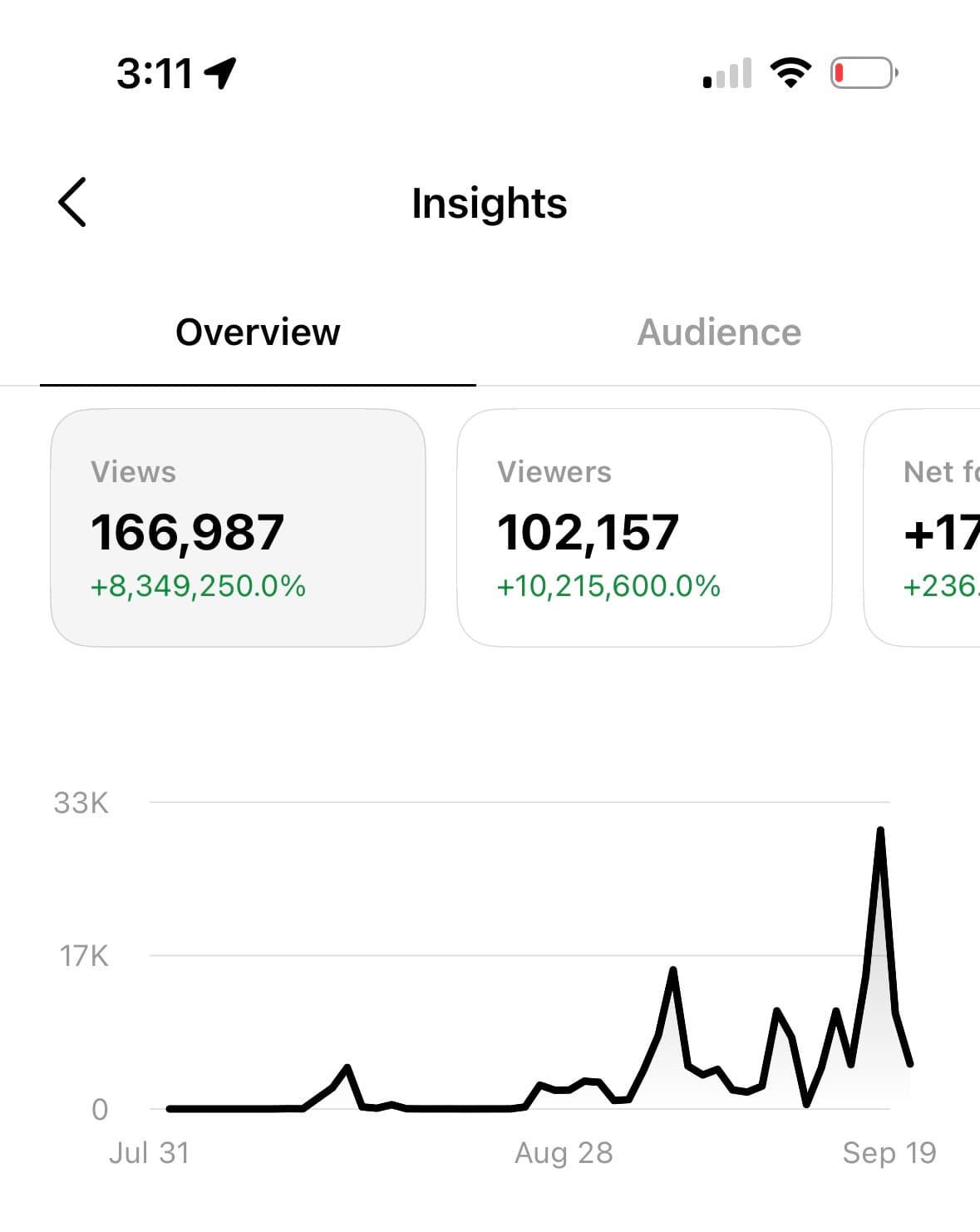
I started by trying to grow on X, including paying for Premium, but the reach I was getting did not feel proportional to the effort. I shifted more attention to Threads. With only about 255 followers at the milestone I first recorded, the account passed 159,000 impressions in a month. By the time I captured the later Threads Insights screen used below, views had continued to 166,987. This is one account's first-party case study, not a universal claim about how every Threads account will perform.
The comparison that changed how I looked at follower count
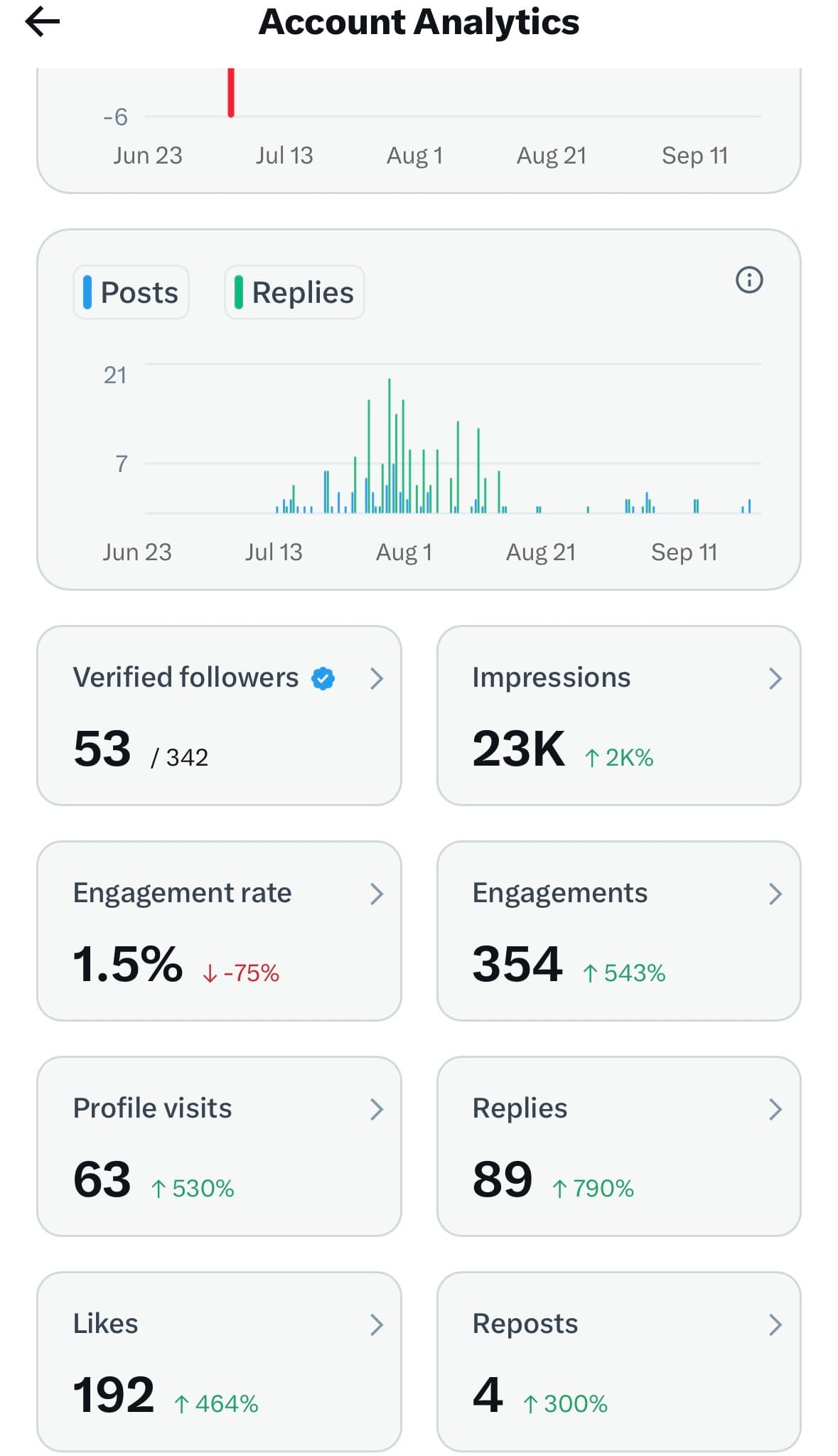
My earlier X account analytics showed 23K impressions in the selected period, alongside 354 engagements, 63 profile visits, 89 replies and 192 likes. The important lesson for me was not that one platform is always better. It was that audience size alone was not explaining distribution. I needed to look at what each individual post was earning beyond the follower base.
The Threads account kept reaching people who were not already followers
At the 159K milestone the account had only about 255 followers. The later Threads Insights capture below shows 166,987 views and 102,157 viewers. That gap is the reason I stopped treating follower count as the main measure of whether a post had distribution. The observable fact is simple: this account's reach extended far beyond its follower count. The screenshot alone does not prove the exact mechanics of the recommendation algorithm, so I do not treat it as evidence for a universal algorithm rule.
Raw impressions were useful, but they did not tell me what to repeat
A large view number feels good, but it leaves the next decision unanswered. I wanted to know whether a new post was moving faster than my normal posts, which topics repeatedly earned replies, which formats were worth testing again, and where I should spend time engaging. That is a different job from displaying an analytics total.
The metric I wish I had from day one: performance versus my own baseline
The useful comparison is not my account versus a huge creator. It is a measurable post versus my own recent history. Chirp now prefers repeated snapshot velocity when enough data exists and compares the latest measurable post with the account's median recent velocity. When snapshot history is too sparse, it says that clearly instead of inventing a breakout score.
What I would test if I were starting again
I would keep the workflow small: publish consistently enough to create a sample, track posts over time instead of only at the final total, separate reach from conversation quality, save the topics and formats that repeatedly beat my own baseline, and spend engagement time on conversations that actually match what I build or sell. The goal is to create repeatable decisions, not chase one lucky spike.
Why I built Chirp
Chirp grew out of this problem. It connects to Threads, syncs first-party post data, measures personal performance baselines when the data supports them, schedules posts, prioritizes replies, and uses Scout to surface conversations worth joining. The product is still being tested with real users, so the standard is simple: every insight should trace back to observed account data or clearly say when it is still learning.
Connect Threads and let Chirp build a personal baseline from your synced history. If the data is too sparse, Chirp says so instead of inventing a conclusion.
Connect Threads free →